



Post-tensioned slabs
Solid, ribbed and flat slabs for residential and commercial buildings and multi-storey car parks: longer spans, thinner sections and lighter dead loads.
We design, supply and install post-tensioned slabs and hand over stressing and elongation reports, with a 10-year warranty on design and execution.
Solid, ribbed and flat slabs for residential and commercial buildings and multi-storey car parks: longer spans, thinner sections and lighter dead loads.
To carry loads where the column grid changes between floors.
Post-tensioned rafts that cut thickness and rebar quantities and limit shrinkage cracking.
Circular tanks and structures that need to be watertight and highly resistant.
We study the conventional design and propose a post-tensioned alternative, comparing quantities, cost and schedule.
Tendon and chair layout drawings, quantity take-offs, elongation reports and stressing and grouting records.
Tendons are laid inside the slab on a calculated curve: high over the columns, low at mid-span, held on chairs at exact heights.
Concrete is poured around the tendons. Under load, any slab tends to sag at mid-span. That is where stressing comes in.
Once the concrete reaches the required strength, each tendon is stressed with a hydraulic jack and locked in its anchor. The curved profile pushes up against the load, so the slab sags and cracks less.
Slabs up to 20% thinner, up to 50% less reinforcement, and longer spans with fewer columns.
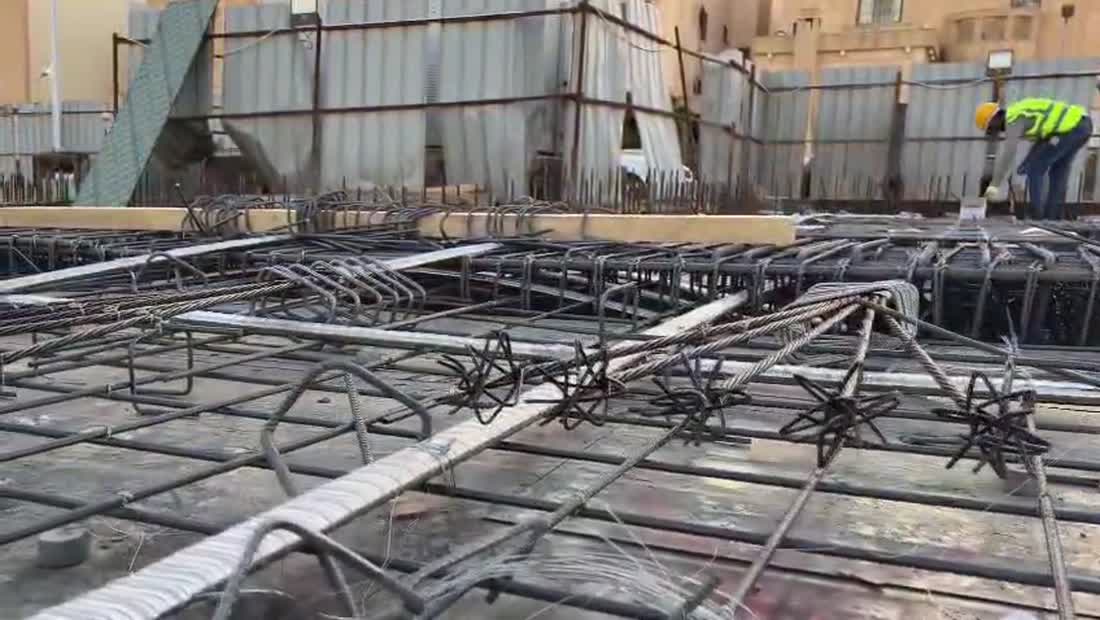
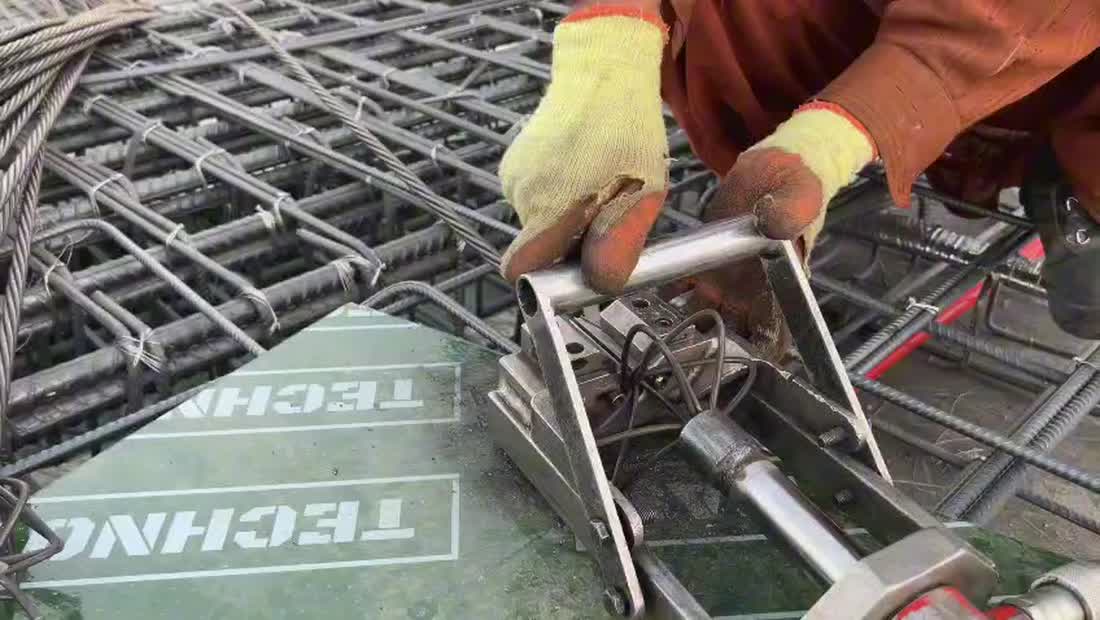
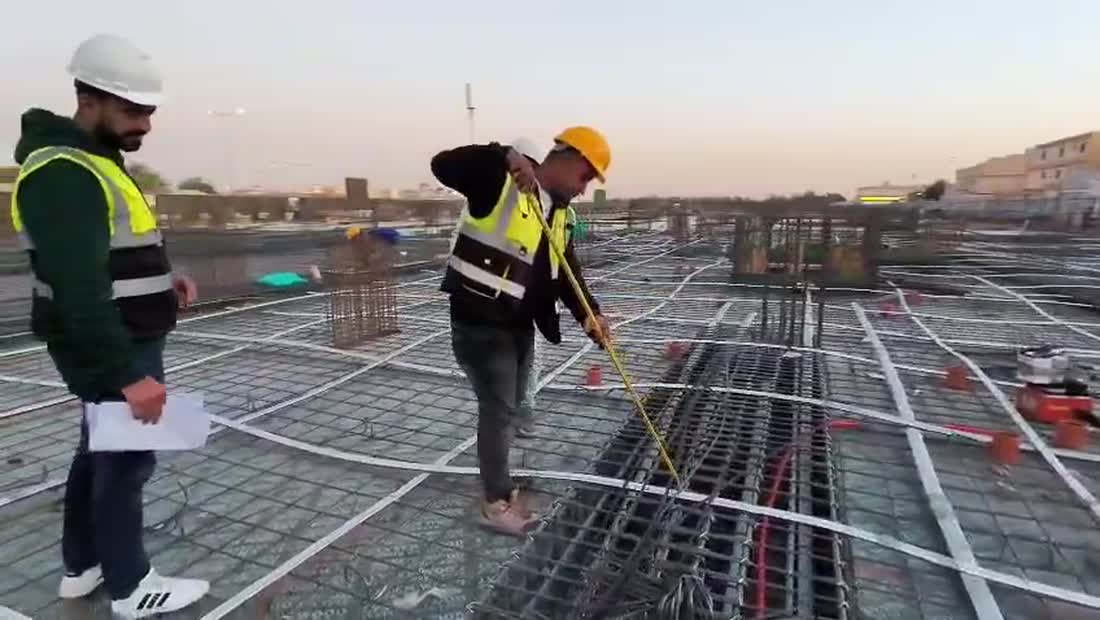
Post-tensioning is a way of reinforcing concrete with high-strength steel tendons laid inside the slab on a calculated curve: high over the columns and low at mid-span. Once the concrete reaches the required strength, each tendon is stressed with a hydraulic jack and locked in its anchor. The curved profile pushes up against the load, so the slab sags and cracks less.
Slabs up to 20% thinner, up to 50% less reinforcement, and longer spans with fewer columns. That saves concrete and steel, lightens dead loads, and can fit an extra floor within the same permitted height.
Post-tensioning only: solid, ribbed and flat slabs for residential and commercial buildings and multi-storey car parks, beams and transfer plates, foundations and rafts, tanks and special structures, plus design review with post-tensioned alternatives, shop drawings and documentation.
Our head office is in Riyadh (Al Manar district, Imam Al Shafi'i Street) and our projects are across the Kingdom, including Riyadh, Jeddah, Dammam, Al Khobar, Madinah, Al Ahsa and Abha. We have delivered more than 300 projects and more than 5 million m² of post-tensioned slabs.
One contract covers the whole cycle: design review and alternative proposals, shop drawings, installation and stressing, then elongation reports, grouting and final documentation. We give a 10-year warranty on design and execution together, with one point of responsibility.
We use an anchorage system with a European Technical Assessment (ETA) and CE marking, and we are a member of the Post-Tensioning Institute (PTI), working to its guides.
Send us the structural drawings and we will come back with a post-tensioned alternative and a comparison of quantities and schedule. Reach us by phone, WhatsApp or email at info@smartcitiespt.com, Saturday to Thursday, 8:00 to 17:30.
We study your structural drawings and send back a post-tensioned alternative with a comparison of quantities and duration.